
Tapping the Future: Jharkhand Startup Patents Smart Water System, Powers Eco-Barter Revolution
Ranchi, Jharkhand: April 11, 2025 – Aquiet celebration in Ranchi marks a historic milestone in India’s journey toward ecological justice and water security. After six years of intensive research and grassroots trials, TAP@APP — a smart water monitoring system conceived by local innovator Saket Kumar and his peers from the Indian Institute of Technology Kharagpur — has officially secured a patent.
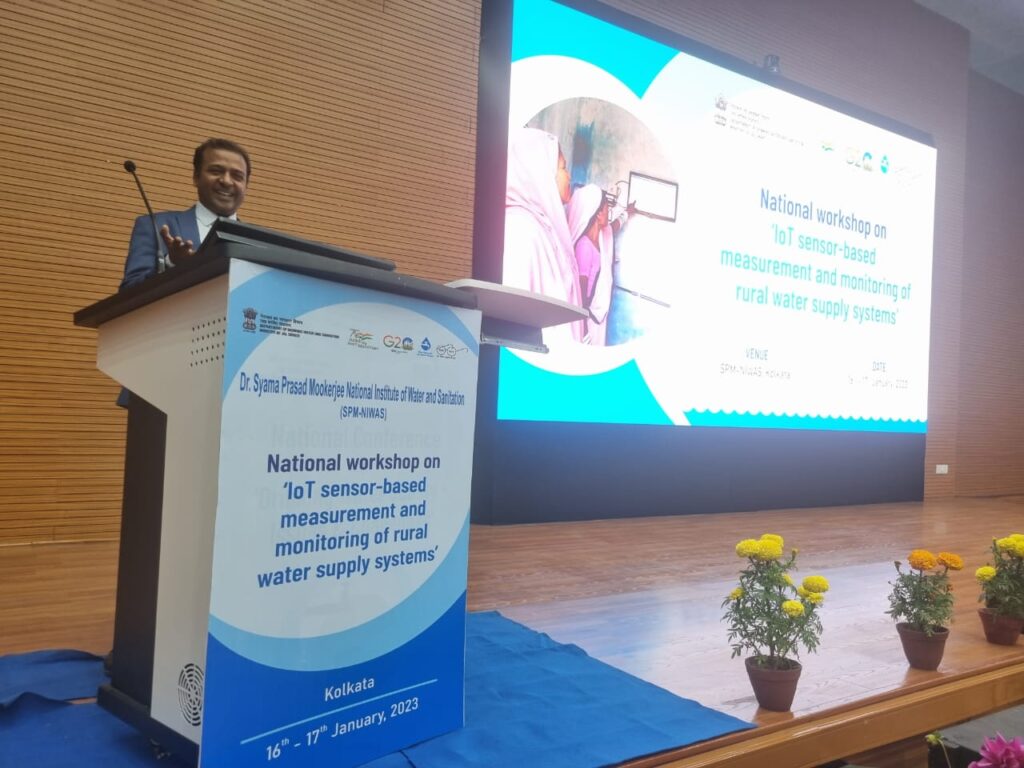
From arsenic-hit villages to global acclaim, TAP@APP blends IoT and dignity to deliver clean water, sustainable livelihoods, and a new rural economy driven by participation and purpose. Registered under Kumar’s startup, VAS Bros Enterprises Private Limited (VBEPL), the innovation stands poised to transform how rural India addresses water, waste, and sustainability.
The model’s first deployment launched on February 16, 2025, in Pakri village, Dumaria Panchayat (Ara, Bihar)—a region historically affected by arsenic-contaminated groundwater. The purification system uses OAS technology, an indigenous method incubated at IIT-Kharagpur, which utilises treated laterite to filter arsenic and other toxins. Listed among India’s Top 100 Innovations, OAS is now set for mass production at the Lohardagga Industrial Area, with land support from the Jharkhand Industrial Area Development Authority (JIADA).
TAP@APP is more than just a device; it represents the intersection of real-time monitoring, intuitive design, and grassroots empowerment. Built on a mod-bus platform, the system incorporates proprietary sensors that combine titration and imaging techniques, alongside IoT and AI capabilities. A 4G/5G communication module connects village-level water sources to cloud-based servers, providing real-time water quality diagnostics and predictive alerts.
This innovative ecosystem is attracting attention both domestically and internationally. Supported by PanIIT USA, WHEELS Global Foundation, WIN Foundation, and HUSK Power Systems, the initiative is also collaborating with the National Bamboo Mission and the Ministry for Development of North Eastern Region to establish bamboo processing units. Through vocational training programs under the National Skill Development Corporation’s Green Skills initiatives, local youth, particularly women, are receiving hands-on training, positioning them as leaders in this green economy.
The programme has already caught the eye of key policy makers. Both NITI Aayog and the Office of the Principal Scientific Advisor have praised the initiative for its alignment with the 17 Sustainable Development Goals, the 29 functional domains of Panchayati Raj governance, and WaterBANK’s own framework of eight essential water needs. What sets this program apart is its unique ability to fuse cutting-edge technology with the dignity of grassroots participation, transforming every act of sustainability into tangible rewards, and every drop of clean water into a shared achievement.
Saket Kumar, CEO of VBEPL and President of WaterBANK, summarises the vision succinctly: “BarterWATER isn’t just about technology—it’s about dignity, participation, and future-proofing rural India against the climate crisis.
In a world grappling with environmental uncertainty, this homegrown innovation from Jharkhand offers more than just hope—it presents a replicable model where sustainability is not imposed but co-created, and where the future flows, drop by drop, from the ground up.
- 2023 UN Water Conference
- 2026 UN Water Conference
- About us
- BAANS Mission
- BarterWATER
- Cart
- Checkout
- Contact us
- Donation Confirmation
- Donation Failed
- Donor Dashboard
- Get Involved
- GlobalLaunch
- My account
- OaS
- PatentGranted
- PYAAS Mission
- Role of Academia in Water Action
- Role of Governance in Water Action
- Services
- Shop
- Sustainable Technology Development
- TAPATAPP
- Trial and error
- WaterACTIONs
- WB1